Workshops
The Saharanpur carving tradition
The town is not a factory park. It is lanes of family workshops, and the objects on Indian tables still start there.
· 4 min read · Updated
Ask for “handcrafted wood” online and you will get a photograph of a bowl. Ask a person in Saharanpur what the town makes and the answer is more ordinary, which is why it has lasted: masala boxes, trays, turned legs, a console top with a border someone still cuts by hand because the machine version looks dead in a real room.
Saharanpur’s wood cluster, in western Uttar Pradesh, is lanes rather than a single shed. Inlay, turning, and relief carving sit next to each other, often in the same family, supplying the rest of the country with things people actually touch every day. Nteak does not pretend to be that town. We buy and commission from workshops in that tradition, and we would rather decline a brief than invent a heritage we do not have.
Three kinds of hand, one town
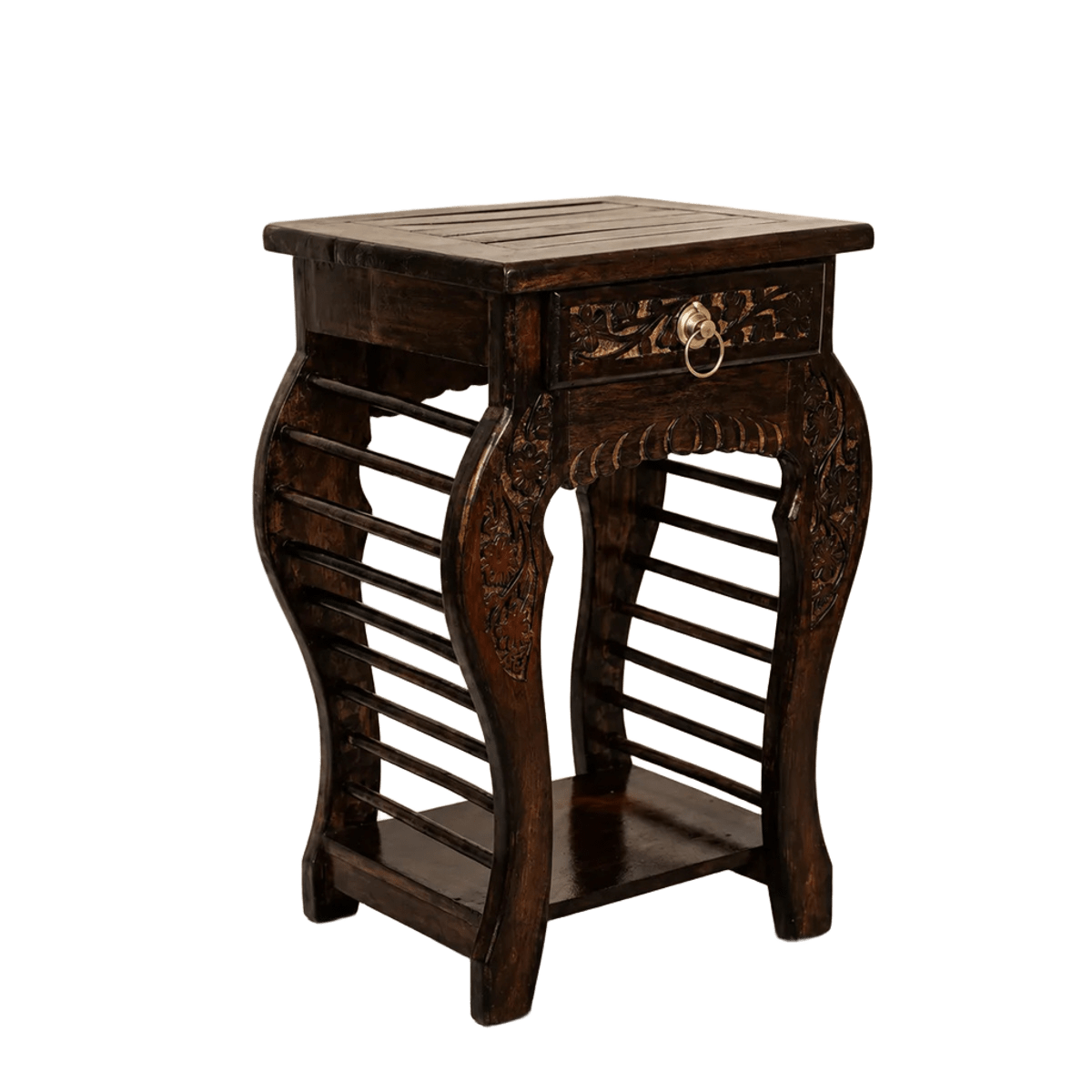
Relief carving is the picture in the wood: a border, a flower, a repeat that should feel cut, not stamped. Turning is the round work — legs, boxes, the ring of a tray. Inlay is the quiet one: brass or a contrasting wood set into the surface. Each fails differently. A stamped relief looks the same in every light. A badly seated inlay lifts the first time the piece meets a wet cloth. A turned leg that is only veneer over a hollow form is light in the hand in a way solid wood is not.
You do not need to become a connoisseur to shop. Pick the piece up, or read the listing as if you could. Solid sheesham woodware has weight. A carved edge should change slightly along its length. If every flower is identical to the millimetre, you are looking at a mould.