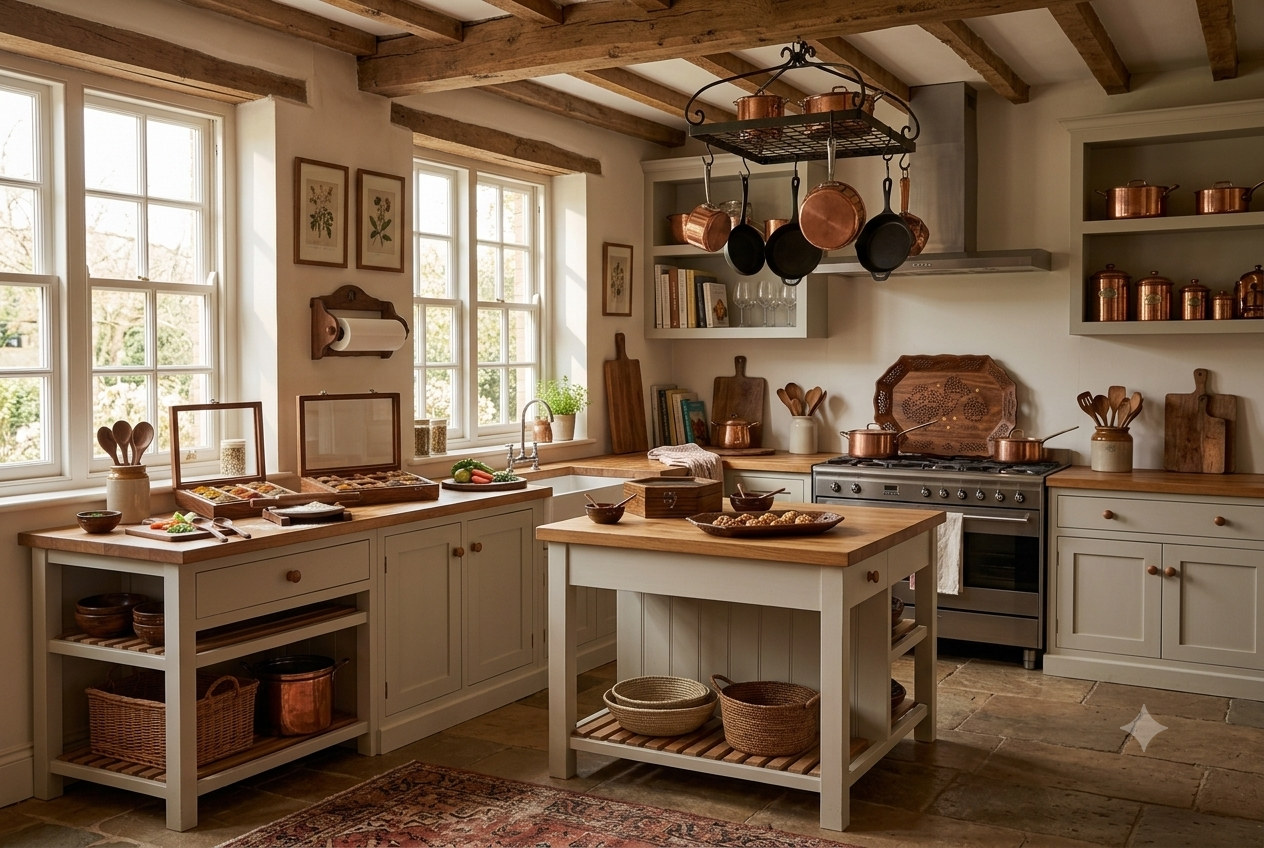
These woods do not want a ritual. They want a dry cloth most weeks, and oil when the season changes.
· 4 min read · Updated
Teak and sheesham fail in kitchens and entryways for dull reasons. A wet bowl left to soak. Lemon on a brass inlay because someone liked the smell. A masala box perfumed after it smelled of chilli, which only traps the chilli under something sweeter. None of this is dramatic. All of it is permanent if you repeat it.
The care is short. The mistakes are shorter. What follows is the same note we would give you if you wrote to the studio about a mark on a top.
Most weeks, only a cloth
Wipe with a barely damp cloth, then a dry one, along the grain. Dust is enough of a reason. Do not flood the surface to “clean the pores”. Water that sits in an inlay line is how brass loosens and how a pale ring begins. Bowls and boards that held food get the same cloth, never a sink full of water.
A dry buff after a barely damp wipe. Oil is a season, not a Sunday.
Once a season, a little oil
When the air goes dry, or the top looks thirsty rather than dirty, use a few drops of food-safe mineral oil on cotton. Wipe on, wait a short while, wipe off until the rag comes away clean. If the wood feels sticky the next morning, you used too much and you should buff again. Oil is not a varnish. You should not see a film.
Skip coconut oil and skip anything sold as a gloss. They go rancid or they sit on the surface. Furniture oil from a hardware shop is fine if the bottle says mineral oil and you still wipe the excess off. The same pass works for a teak table and for kitchen woodware.
Brass inlay and the masala box
Lemon, vinegar, and tamarind eat the colour out of brass. They do not “brighten” an inlay; they strip it. If a spill reaches the metal, wipe it immediately with a plain damp cloth and dry it. Do not polish inlay with a brass dip. The surrounding wood will take the chemical too.
A masala box that smells of chilli wants air, not scent. Empty it. Leave it open in shade, not on a hot windowsill. A day is usually enough. Perfume and essential oils bind to the wood and you will taste them in the next batch. If the smell is in a serving board, the same shade-and-air works; soap and a flood of water do not.
Marks we can live with, marks we cannot
A soft sheen where hands rest is the wood being used. A white ring from a wet glass is water in the grain — sometimes oil and patience shift it, sometimes they do not. Deep heat marks from a pan do not come out. That is why a trivet exists, and why a teak console gets a tray before it gets a glass.
If you are buying the piece now rather than rescuing one, read how the carving towns still make the everyday objects in the Saharanpur note. Care is simpler when the wood was solid to begin with.
Follow it through
The season, in order
Care is a short sequence. Skip a step and the wood usually forgives you. Repeat the wrong one and it does not.
01
Cloth
Wipe, then dry
A barely damp cloth along the grain, then a dry one. Do not soak a bowl and do not flood an inlay line.
02
Oil
A few drops, once a season
Food-safe mineral oil on cotton. Wipe it on, then buff until the rag comes away clean. The surface should not stay sticky.
03
Brass
Keep acid off the metal
Lemon, vinegar, and tamarind strip inlay. Wipe a spill with plain water and dry it. Skip the brass dip.
04
Air
Empty the box and leave it
A chilli smell wants shade and an open lid, not perfume. Scent binds to the wood and comes back in the next use.
Questions we hear
How often should I oil teak or sheesham?
Once a season, or when the surface looks dry. A few drops of food-safe mineral oil on cotton, wiped off until the wood is not sticky. Most weeks need only a barely damp cloth, then a dry one.
Can teak bowls go in the dishwasher?
No. Do not soak them. Wipe, dry, and oil lightly when the wood looks thirsty.
What should not touch brass inlay?
Lemon, vinegar, and tamarind. Acids dull the metal. Wipe spills with a plain damp cloth and dry at once. Do not use a brass dip on inlay.
How do I remove a chilli smell from a wooden masala box?
Empty it and air it in the shade. Do not perfume it. Scent binds to the wood and shows up in the next use.
Care keeps a piece you already chose. If the room itself is the project — several pieces, a visit, a timeline — that begins as a consultation.